Winter Driving Tips for Truck Drivers
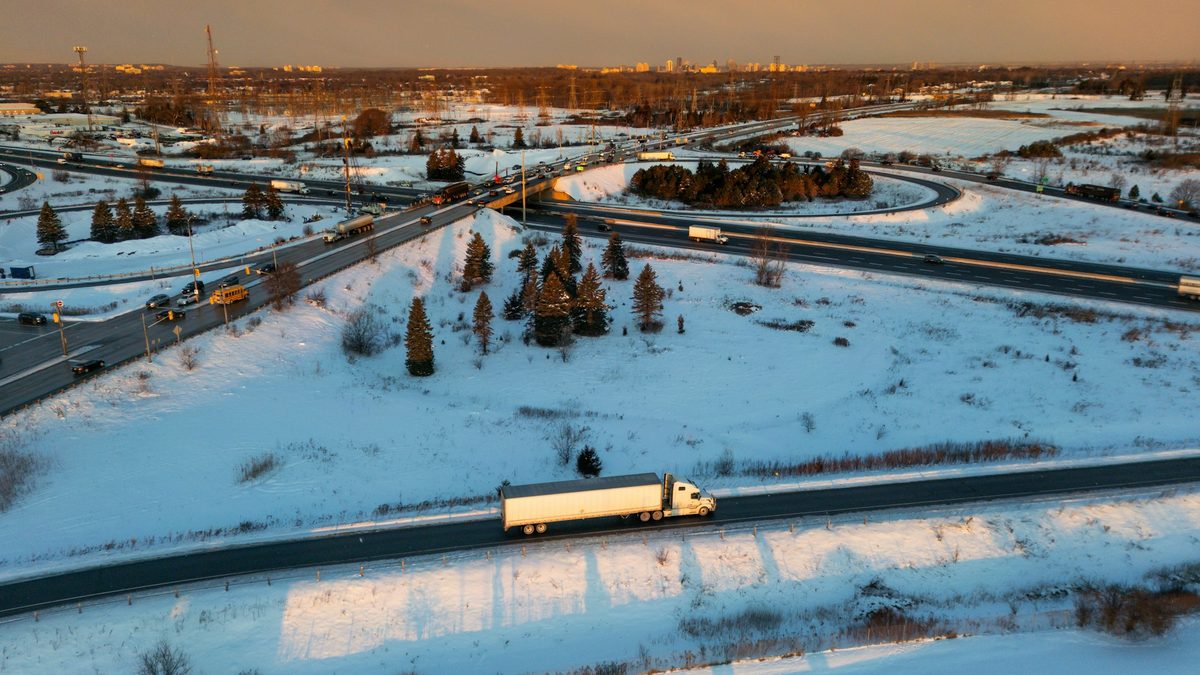
The best winter driving tips for truck drivers come down to four things: slow down, leave more space, check your truck closely, and park when it gets too dangerous. FMCSA suggests cutting your speed by about a third on wet roads and by half or more on snow-packed roads. Federal rules also say you must slow down in snow and ice, and stop when it is no longer safe.
Key takeaways
- FMCSA says to reduce speed by 1/3 on wet roads and by 1/2 or more on snow-packed roads.
- 49 CFR 392.14 requires extreme caution and lower speed in snow, ice and sleet. If it gets dangerous enough, you must stop.
- Manufacturers generally advise against using the engine brake on wet or slippery roads.
- Pack a winter survival kit, and stay with your truck if you get stranded.
- The adverse driving rule can add up to 2 hours, but only for conditions you could not have known about before your day started.
Winter pre-trip: what to check in the cold
Cold weather is hard on equipment. Add these checks to your pre-trip inspection checklist:
- Lights and reflectors. Brush off snow and scrape ice so other drivers can see you.
- Windshield, wipers and washer fluid. Use a winter washer fluid, and make sure the defroster and heater work.
- Tires. Check tread and pressure with a gauge. Tread matters even more on snow and slush.
- Air system. Moisture in air lines can freeze. Follow your carrier's process for draining air tanks.
- Brakes. Make sure the brakes release and the trailer wheels roll after a cold night parked.
- Trailer roof. Snow and ice sliding off a trailer can hit the cars behind you. Clear what you safely can.
- Emergency equipment. Your three reflective triangles and fire extinguisher are required under Section 393.95. Make sure you can reach them.
Winter driving tips for truck drivers on the road
Slow down more than you think
FMCSA's Too Fast for Conditions tips give a simple rule. Cut your speed by about a third on wet roads and by half or more on snow-packed roads. If 60 mph is safe on dry pavement, that means about 40 mph on wet roads and 30 mph or less on packed snow.
FMCSA also points out that posted speeds on curve warning signs are meant for cars, not large trucks. Take curves and ramps even slower, and do your braking before the curve, not in it.
Leave more room
Rain, sleet and snow can greatly increase how far a loaded truck needs to stop. Open up a bigger gap than usual and watch far ahead so you can ease off early. Our guide to truck following distance and blind spots covers spacing in more detail.
Be smooth with every input
Brake, steer and speed up gently. FMCSA notes that loaded trailers have a higher center of gravity, and sudden speed changes can shift the load and lead to a skid or rollover. Hard moves on ice are how jackknifes start.
Turn off the engine brake on slick roads
Manufacturers generally advise drivers not to use a retarder, also called a jake brake, on wet or slippery roads. Check your truck's manual and your carrier's policy.
Watch for ice you cannot see
Bridges, overpasses and shaded spots often ice up before the rest of the road. If the road looks wet but you see no spray from other vehicles, think ice. Feel for ice building on your mirrors and antenna, too.
Light loads need extra care
An empty or light dry van puts less weight on your tires, so you have less grip. Strong crosswinds add to the risk. Slow down, and park if wind and ice together make the truck hard to control.
Know when to park it
Section 392.14 is clear. When snow, ice, sleet or fog hurts visibility or traction, you must use extreme caution and reduce speed. If conditions get dangerous enough, you must stop driving and not start again until it is safe.
Talk with dispatch early when weather turns. A good carrier will back your call to shut down. FMCSA's tips for truck and bus drivers also say to check forecasts and change your route if it is unsafe.
The adverse driving conditions rule lets you drive up to 2 hours past your normal limits to finish a run or reach a safe place. It only applies to weather or road conditions you could not have known about before your day began or before you were dispatched. Learn the rest of the clock rules in our guide to hours of service rules for truck drivers.
Chains and state rules
Some states require trucks to carry or use tire chains or other traction devices on certain roads in winter. The rules, dates and places vary by state. Check the state DOT website for every state on your route before you leave, and learn how to put on chains before you need them.
Pack a winter survival kit
A tip sheet from Washington State's Department of Labor and Industries, A Kit to Fit a Freezin' Season, is posted in the CDC's online library. It lists what to keep in the truck:
- Warm socks, hats and gloves
- A sleeping bag or blankets
- Bottled water and non-perishable food
- A flashlight, first aid kit, jumper cables and tool kit
- Chains, a small tarp to lie on while chaining up, and a shovel
- Windshield de-icer and a scraper
- Emergency flares
- A charged phone with emergency contact numbers
If you get stranded, NHTSA's winter driving tips say to stay with your vehicle and avoid overexerting yourself. Keep the exhaust clear of snow so fumes do not build up in the cab.
Take care of yourself, too
Dress in layers you can add or remove. Steps, catwalks and fuel islands get slick, so use three points of contact getting in and out of the cab. Winter driving takes extra focus, so get real rest before you roll.
Drive winter roads with support behind you
JOMA Cargo runs dedicated interstate lanes and Amazon freight with dry van trailers, in Freightliner Cascadia and Volvo tractors. Our 24/7 dispatch and safety support are there for our drivers when the weather turns. Email hiring@jomacargo.com or apply at /driver.
Questions drivers ask
How much should a truck driver slow down on snow?
FMCSA suggests cutting speed by about a third on wet roads and by half or more on snow-packed roads. If 60 mph is safe on dry pavement, that means about 30 mph or less on packed snow. Slow down even more on ice or when you cannot see well.
Should I use my jake brake on icy roads?
FMCSA notes that manufacturers generally advise drivers not to use a retarder or jake brake on wet or slippery roads. Check your truck's manual and your carrier's policy before winter hits.
When should a truck driver stop driving in winter weather?
Under 49 CFR 392.14, you must slow down and use extreme caution in snow, ice or sleet. If conditions become dangerous enough, you must stop and not drive again until it is safe. Call dispatch and find a safe place to park.
Does bad weather give me extra driving hours?
Sometimes. The adverse driving conditions rule allows up to 2 extra hours to finish a run or reach a safe place. It only applies to conditions you could not have known about before your day started, not weather that was already forecast.
What should be in a trucker's winter survival kit?
Pack warm clothes, a sleeping bag or blankets, water, non-perishable food, a flashlight, a first aid kit, chains, a shovel, a de-icer and scraper, flares and a charged phone. If you get stranded, NHTSA advises staying with your vehicle.
Sources
- FMCSA: CMV Driving Tips, Too Fast for Conditions
- FMCSA: Tips for Truck and Bus Drivers
- 49 CFR 392.14 Hazardous conditions; extreme caution (eCFR)
- 49 CFR 395.1 Scope of rules, adverse driving conditions (eCFR)
- 49 CFR 395.2 Definitions (eCFR)
- 49 CFR 393.95 Emergency equipment on all power units (eCFR)
- CDC Stacks: Tip Sheet, A Kit to Fit a Freezin' Season (Washington State Dept. of Labor and Industries)
- NHTSA: Winter Driving Tips
This article is general information for drivers, not legal or medical advice. Rules change, so check the linked FMCSA and state sources for the current version.